Soft Tissue Surgery for Dogs & Cats in St. George, UT
We’re not open yet — Agave is expected to open in early 2027. Reach out now and we’ll get you on the new-patient list.
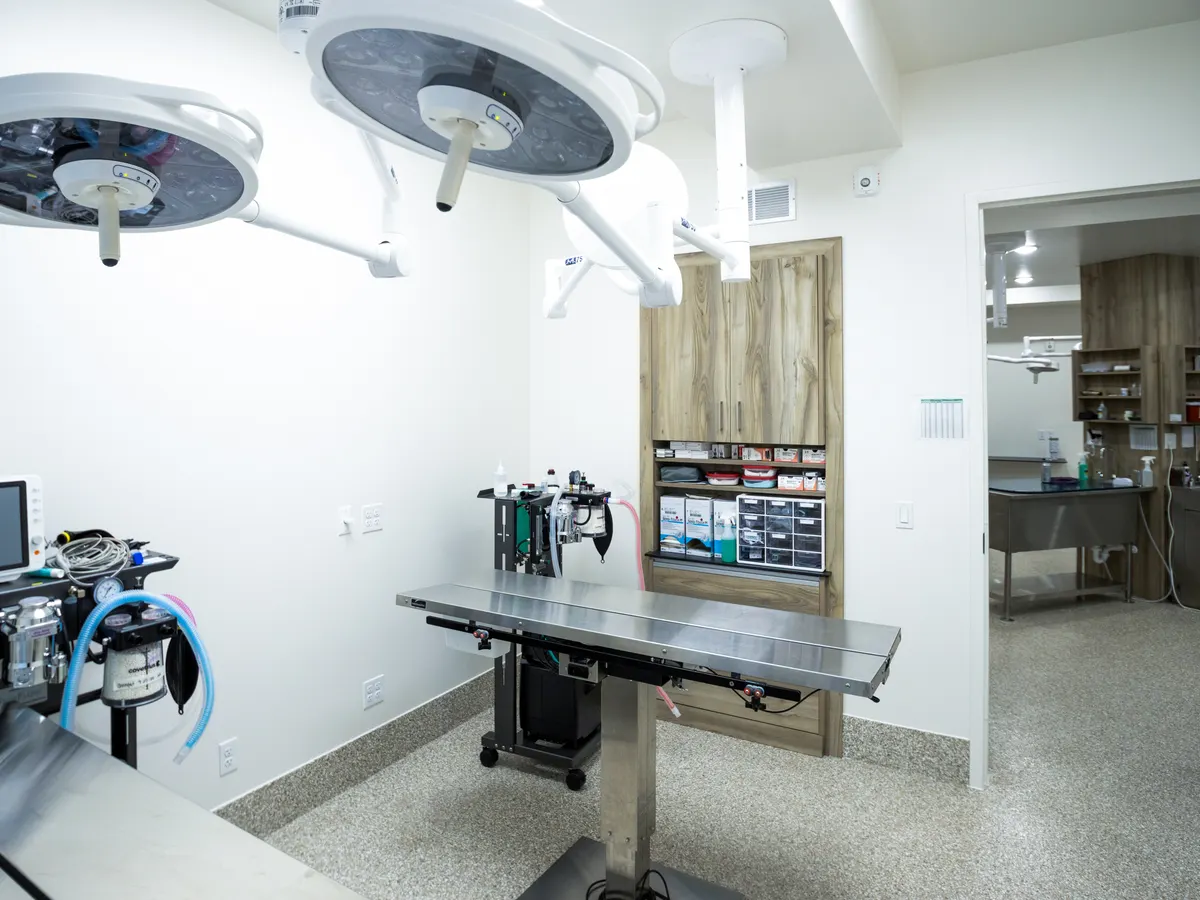
When your dog or cat needs surgery that isn’t bone or joint related, that’s soft tissue surgery — procedures involving the skin, abdomen, and the organs and structures inside it. At Agave Animal Hospital in St. George, our veterinary team approaches every procedure with the same goal: address the problem thoroughly, keep your pet comfortable, and get them home and healing as smoothly as possible.
Common soft tissue procedures
Soft tissue surgery covers a wide range of needs. Depending on your pet’s situation, care may include:
- Foreign body removal — pets who swallow rocks, toys, or socks
- Mass and lump removal — see our dedicated mass and tumor removal page
- Laceration and wound repair — including bite wounds and injuries picked up outdoors
- Abdominal exploratory surgery to diagnose and treat internal problems
- Bladder stone (cystotomy) and certain urinary procedures
- Hernia repair and skin reconstruction
- Eyelid, ear, and other targeted procedures as needed
Spay and neuter are also soft tissue surgeries — those have their own page since they’re so common. Procedures inside the mouth, like tooth extractions, are covered under dental surgery.
Signs your pet may need soft tissue surgery
Some surgical problems announce themselves loudly; others build quietly for weeks. It’s worth a call if you notice:
- Repeated vomiting or refusing food, especially in a dog who chews rocks, sticks, or toys — the classic warning signs of a swallowed object
- A lump that’s growing, changing shape, or bothering your pet — many are benign, but testing is the only way to know for sure
- Straining to urinate, frequent small accidents, or blood in the urine — possible signs of bladder stones
- A wound that keeps reopening, draining, or simply won’t heal despite basic care at home
- A new bulge or soft swelling near the belly button or groin, which can point to a hernia
A pet who is vomiting repeatedly or can’t keep water down should be seen the same day. A pet straining to urinate without producing anything should be seen immediately — an inability to pass urine can become life-threatening within hours — so contact your veterinarian or nearest veterinary emergency provider right away.
Safety before, during, and after
Good surgery is mostly good preparation and monitoring. Before anesthesia, we recommend pre-surgical bloodwork through our in-house laboratory to confirm your pet is a healthy candidate, and we may use digital X-ray or ultrasound to see exactly what we’re dealing with before the first incision is ever made.
No anesthesia is entirely without risk, but modern monitoring and individualized protocols reduce it substantially. We tailor each anesthetic plan to your pet’s age, breed, weight, and lab results rather than following a one-size-fits-all recipe. During the procedure, a dedicated team member has one job: watching your pet’s heart rate and rhythm, blood pressure, oxygen level, and body temperature from induction until they’re awake again. A heated surgery table and IV fluids help patients stay warm and stable — small details that make a real difference in how smoothly pets wake up.
Pain control starts before the first incision, not after. Multimodal pain management — combining medications that work in different ways — keeps your pet more comfortable with lower doses of each drug, and you’ll head home with clear, written recovery instructions and any needed medication.
What to expect
Most soft tissue surgeries are scheduled procedures with a pre-operative consult, so you know exactly what the surgery involves, what it treats, and what recovery looks like before you commit to anything. When the procedure is scheduled, we’ll give you specific instructions on withholding food beforehand — water is usually fine, and we’ll confirm the details for your pet.
On surgery day, your pet gets a fresh exam before anesthesia, continuous monitoring during the procedure, and a quiet, supervised place to wake up afterward. Most pets go home the same day, once they’re alert, steady on their feet, and comfortable. Before you leave, we walk through incision care, the medication schedule, and activity restrictions together, and we set a recheck to confirm everything is healing on track.
If your pet has an urgent problem like a deep wound or possible obstruction, please reach out about a sick or urgent visit right away.
Recovering in the St. George heat
Healing in Southern Utah comes with a few local wrinkles. For the first week or two — or until your veterinarian clears your pet at the recheck — plan on:
- Indoor rest in the air conditioning. Heat makes panting and swelling worse, and a fresh incision doesn’t need a triple-digit afternoon.
- Short, early-morning leash walks only. No red-rock scrambles, no chasing lizards across the yard.
- Protecting the incision. An e-collar prevents licking, and the site should stay dry — skip baths and swimming until we give the all-clear.
- A quick daily incision check. Mild pinkness is normal; spreading redness, discharge, a gap in the incision, or new swelling deserves a call.
For some procedures, we may also recommend laser therapy to support comfort and healing during recovery.
We’re a new hospital in St. George serving Washington, Santa Clara, Ivins, Hurricane, and Bloomington. To discuss your pet’s surgical needs, please request an appointment through our contact page.
Frequently asked questions
How do I know if my pet needs soft tissue surgery?
Soft tissue surgery is recommended for problems involving the skin, abdomen, or internal organs — things like a swallowed object, a growing lump, a deep laceration, a hernia, or bladder stones. After an exam and any needed diagnostics, your veterinarian at Agave Animal Hospital will explain whether surgery is the right option and walk you through what it involves. To get started, request an appointment through our contact page.
Is anesthesia safe for my dog or cat?
Anesthesia is very safe for most healthy pets when handled carefully. Before surgery we recommend pre-anesthetic bloodwork to check organ function, tailor the anesthetic plan to your pet's age and health, and assign a team member to monitor vital signs throughout the procedure. We also use pain management before, during, and after surgery to keep your pet comfortable.
What does recovery look like after soft tissue surgery?
Recovery depends on the procedure, but most pets go home the same day or the next day with pain medication and written aftercare instructions. You'll typically limit activity, protect the incision (often with an e-collar), and watch for swelling or redness. We schedule a recheck to confirm healing and remove sutures when needed. In St. George's heat, we'll also advise keeping your pet cool and out of the sun while they recover.
Should my pet eat before soft tissue surgery?
Usually no. For most procedures we ask you to withhold food for a set window before anesthesia, because an empty stomach lowers the chance of vomiting while your pet is sedated. Water is generally fine. The right fasting window depends on your pet's age and health — very young puppies and kittens need shorter fasts, for example — so we'll give you exact instructions when the procedure is scheduled.
How long will my pet be at the hospital on surgery day?
Plan on your pet spending a good part of the day with us. That gives our team time for a fresh pre-anesthetic exam, the procedure itself, and a calm, supervised recovery while the anesthesia wears off. The surgery itself varies — a small mass removal may take well under an hour, while an abdominal exploratory takes longer. Most pets go home the same day, once they're alert, steady, and comfortable.
How do I know if my dog swallowed something they shouldn't have?
Repeated vomiting, refusing food, drooling, a tense or painful belly, lethargy, and straining without producing stool are the classic warning signs of a swallowed object. Signs can show up within hours or take a day or two. An untreated obstruction can become life-threatening, so don't wait it out — call your veterinarian right away, or your nearest veterinary emergency provider if the situation can't wait. If possible, bring what's left of the object or its packaging; it helps the care team judge the risk.