Pet Tooth Extractions & Oral Surgery in St. George, UT
We’re not open yet — Agave is expected to open in early 2027. Reach out now and we’ll get you on the new-patient list.
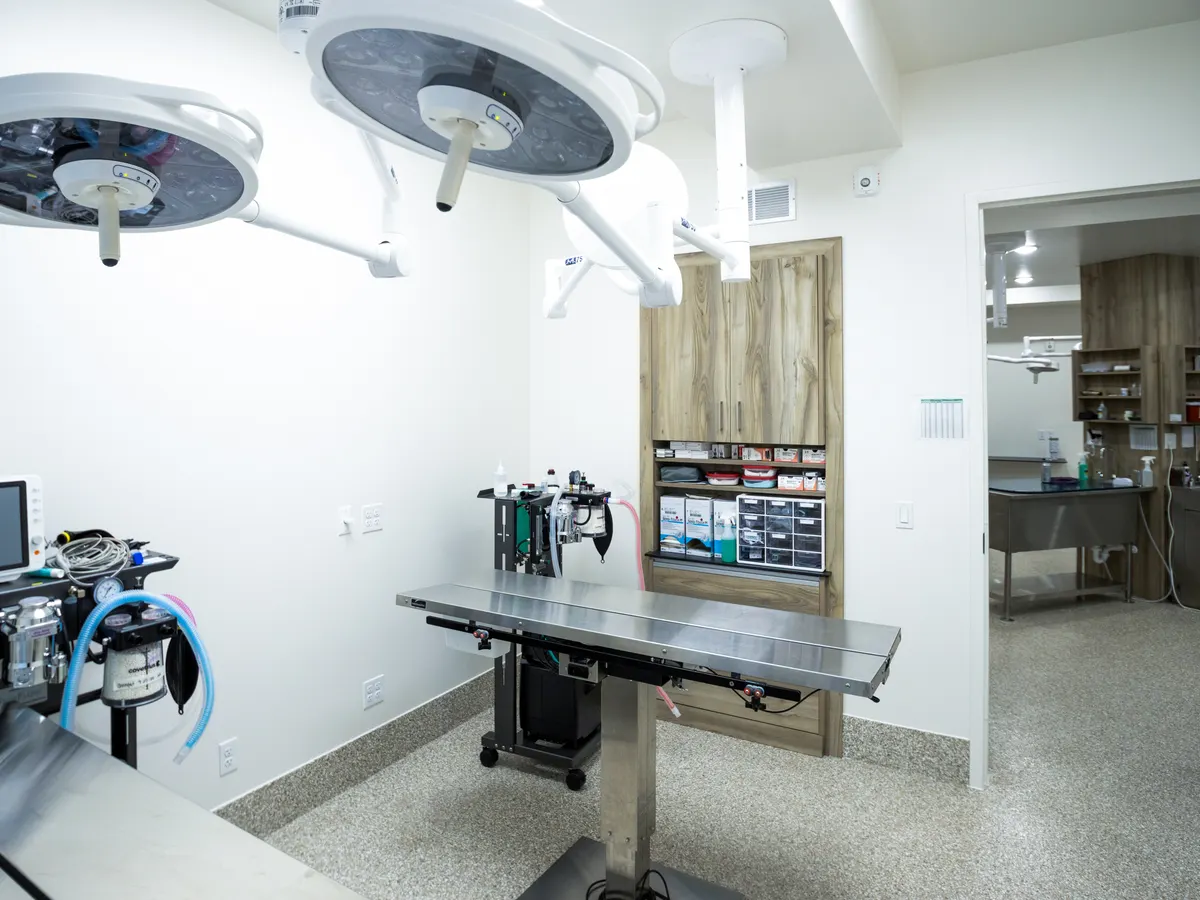
A broken or infected tooth hurts — and most dogs and cats hide it well, chewing on one side or going quiet long before an owner notices. When a tooth is beyond saving, removing it is the kindest, most lasting way to stop the pain. At Agave Animal Hospital in St. George, extractions and oral surgery are done under general anesthesia with the same care we’d want for our own pets, so your dog or cat wakes up on the road to comfort instead of toothache.
This page covers surgical treatment of diseased teeth. If your pet is due for a routine cleaning, start with our dental cleaning service instead.
Signs your pet may have a painful tooth
Dental pain rarely looks the way owners expect. Most pets keep eating — hunger usually wins over a sore mouth — so waiting for a dog or cat to refuse food means waiting far too long. Watch for the quieter signs instead:
- Chewing on one side of the mouth, or dropping kibble while eating
- Suddenly preferring soft food, or swallowing dry food whole
- Pawing at the face, or flinching when touched near the muzzle
- Worsening bad breath, drooling, or blood-tinged saliva
- A swelling under one eye or along the jaw — often an abscessed tooth root
- Losing interest in toys, chews, or play
If your dog just cracked a tooth on a rock or a hard chew, don’t wait for it to “settle down.” Our urgent care service is designed to get painful problems like this evaluated promptly during regular hours.
When a tooth needs to come out
Extraction is not a first resort — it’s what we recommend when a tooth can no longer do its job without causing harm. Common reasons include:
- Fractured teeth — a real risk for active Southern Utah dogs who chew sticks, rocks, or hard antlers on the trail
- Advanced periodontal disease that has destroyed the bone and ligament holding a tooth in place
- Tooth resorption in cats, a painful condition where the tooth structure is gradually destroyed, often starting below the gumline
- Retained baby teeth in puppies and kittens, which crowd adult teeth and trap bacteria
- Abscesses, infected roots, or loose and mobile teeth
When a tooth can be saved, we’ll tell you. When it can’t, removing it is far kinder than leaving your pet to live with a low-grade toothache that never lets up.
How we keep your pet safe and comfortable
Every oral surgery starts below the surface. Dental X-rays show the tooth roots and surrounding bone, so we treat what’s actually there — not just what’s visible above the gumline. Care may include pre-anesthetic bloodwork through our in-house laboratory, individualized anesthesia with monitoring of vital signs, local nerve blocks, and gentle surgical technique. For multi-root teeth, removal may involve sectioning the tooth and suturing the site with material that dissolves on its own as the gum heals.
We’re honest about anesthesia: no procedure is entirely without risk. What we can do is stack the odds firmly in your pet’s favor — pre-anesthetic screening, an anesthetic plan built around your pet’s age and health, and continuous monitoring from induction through recovery all work together to reduce that risk. Pain is managed before, during, and after the procedure, and oral surgery takes place in the same surgical suite, and to the same standard, as our other surgical procedures.
What surgery day looks like for you
When the procedure is scheduled, we’ll walk you through exactly how to prepare, including when your pet should have their last meal. Because X-rays often reveal problems hiding below the gumline, we’ll agree on a plan with you beforehand — and call you during the procedure if the findings change it. Most pets recover from anesthesia under supervision and go home the same day with medications, soft-food guidance, and written instructions, so you know exactly what to expect that first evening at home.
What recovery looks like
Most pets feel noticeably better within days — often friendlier, more playful, and eager to eat, because the thing that hurt is finally gone. Plan on:
- Soft food for a short healing period, then a gradual return to the normal diet
- No hard chews, tug games, or rough play while the surgical site heals
- A short course of pain medication, plus antibiotics if infection was present
- A follow-up visit to confirm the gums have healed cleanly
Dogs and cats adapt remarkably well to losing teeth — even cats who need several teeth removed for resorption typically eat and play comfortably once healed.
Protecting the teeth your pet keeps
The best extraction is the one your pet never needs. Regular dental cleanings and home brushing slow the periodontal disease that costs pets teeth, and a yearly wellness exam gives us a chance to spot trouble in the mouth early. Choose chews carefully, too: a good rule of thumb is that anything too hard to dent with a fingernail — antlers, hooves, rocks masquerading as toys — is hard enough to crack a tooth. For a deeper look at keeping your pet’s mouth healthy, see our pet dental health guide.
If your dog or cat has a broken, loose, or painful tooth, please request an appointment through our contact page and our St. George team will help you plan the next step.
Frequently asked questions
Will my pet be in pain after a tooth extraction?
Pets are kept comfortable throughout. We use local nerve blocks during surgery and send home pain medication for recovery. Most dogs and cats actually feel much better within a few days because the source of their pain is gone — many owners notice their pet is more playful and eating more eagerly than before.
Why does my pet need anesthesia for an extraction?
General anesthesia lets us remove a tooth safely, completely, and without fear or pain for your pet. It also allows us to take dental X-rays, address the tooth roots below the gumline, and place sutures. Care may include pre-anesthetic bloodwork and continuous monitoring of vital signs to keep your pet safe.
Can my dog or cat eat normally after losing a tooth?
Yes. Dogs and cats adapt remarkably well and continue to eat, play, and chew comfortably after an extraction. We typically recommend soft food for a short healing period, then a return to your pet's normal diet once the surgical site has healed.
Can a broken or infected tooth heal on its own?
No. Tooth enamel doesn't regrow, and once a fracture exposes the sensitive pulp inside, bacteria can travel down to the root and cause infection. The pain may seem to fade as the nerve dies, but the problem quietly continues in the bone around the root. That's why we recommend having any broken or discolored tooth examined and X-rayed rather than waiting to see if it improves.
Is my dog or cat too old for dental surgery?
Age by itself is rarely the deciding factor — overall health is. Pre-anesthetic bloodwork, an anesthetic plan tailored to your pet, and continuous monitoring reduce risk for senior pets, and for many older dogs and cats the bigger risk is living with chronic dental pain and infection. We evaluate every pet individually and talk through the options honestly before recommending surgery.
My dog broke a tooth — does it need to be seen right away?
Soon, yes. A fracture that exposes the pulp is painful and gives bacteria a path to the root, so it's best examined within days rather than weeks. Until the visit, offer soft food and put hard chews away. If your pet is bleeding heavily, won't eat, or seems distressed, contact your nearest veterinary emergency provider right away.