Mass & Tumor Removal for Dogs & Cats in St. George, UT
We’re not open yet — Agave is expected to open in early 2027. Reach out now and we’ll get you on the new-patient list.
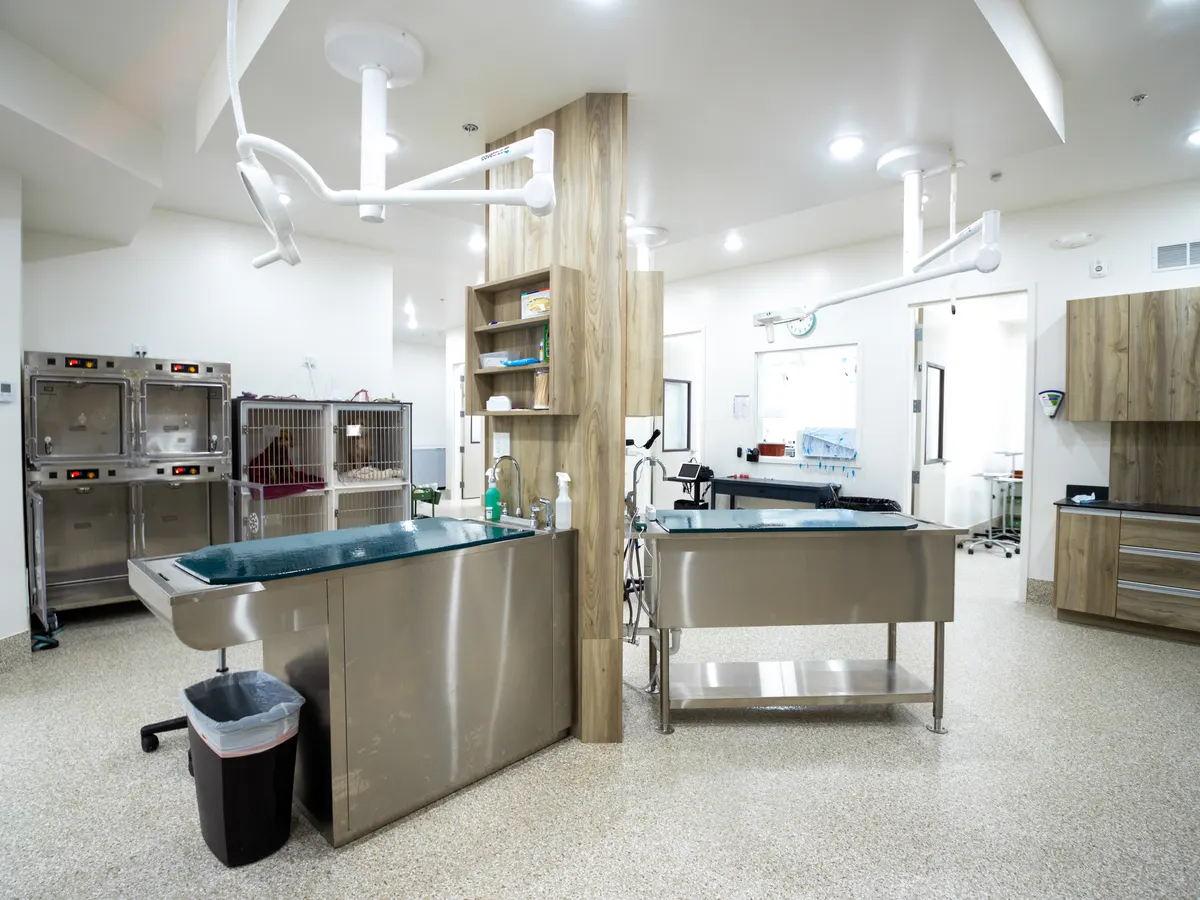
Finding a new lump or bump on your dog or cat is unsettling — and it is one of the most common reasons pet owners visit a veterinarian. The good news is that many masses are benign. The important thing is never to guess. At Agave Animal Hospital in St. George, our veterinarians evaluate masses thoroughly and, when removal is the right choice, handle the procedure with care from start to finish.
Getting answers about a lump
You cannot reliably tell whether a mass is harmless or harmful just by looking at or feeling it. Soft, slow-growing lumps can occasionally be serious, and firm, ugly-looking ones sometimes turn out to be nothing at all. That is why evaluation comes first. Depending on what we find, we may recommend a fine-needle aspirate or biopsy to understand what we are dealing with before making a plan together.
What our mass and tumor care may include:
- A hands-on exam and measurement of the mass so we can track any changes
- Fine-needle aspirate or biopsy to help identify the mass
- Pre-anesthetic exam and recommended bloodwork for surgical safety
- Surgical removal under general anesthesia with dedicated pain management
- Laboratory analysis (histopathology) of removed tissue to confirm the diagnosis
- A clear follow-up and recovery plan, including any recommended next steps
Signs a lump should be checked promptly
Any new mass deserves a look, but a few changes make an appointment more urgent. Watch for:
- Rapid growth, or a lump that changes size from week to week
- Bleeding, ulceration, or an open sore over the mass
- A lump that is firm, fixed in place, or attached to deeper tissue
- Masses in or near the mouth, on a limb, or around the toes, where growth has less room
- Changes in your pet’s appetite, energy, or comfort alongside the lump
A simple habit helps enormously: run your hands over your dog or cat once a month — during a brushing session or a couch cuddle — and note anything new. Knowing when a lump appeared and how fast it has grown is some of the most useful information you can give us.
What to expect at the visit
We start where every good decision starts: a thorough physical exam. Your veterinarian will measure the mass, check for others, and feel nearby lymph nodes. In many cases we can collect a fine-needle aspirate right then — a quick sample of cells taken with a small needle, usually with no sedation needed, and about as uncomfortable as a vaccine.
Sometimes those cells give us a clear answer. Sometimes they tell us we need more information, such as a surgical biopsy or diagnostic bloodwork. For certain masses, imaging like digital X-rays or ultrasound helps us understand what lies beneath the surface before we make a surgical plan. Whatever the findings, you will leave the visit knowing what we know and what we recommend next.
How we approach mass removal surgery
When removal is the right call, we treat it with the same preparation as any surgical procedure: a pre-anesthetic exam, recommended bloodwork, an individualized anesthetic plan, and continuous monitoring by a dedicated team member throughout the procedure. Modern monitoring and tailored protocols are how we keep anesthesia as safe as possible for each individual pet.
Where it matters, we plan the incision to remove not just the visible lump but an appropriate margin of surrounding tissue — the detail that often determines whether a mass is fully gone. Removed tissue can be sent for histopathology, which identifies the mass and tells us whether the margins are clean. Most pets go home the same day with pain medication already working and clear, written recovery instructions, and we schedule a recheck to look at the incision and go over the lab results together.
Lumps and life in Southern Utah
Sun-loving pets in St. George spend a lot of time outdoors, and thin-coated or light-skinned dogs and cats can be more prone to sun-related skin growths — one more reason to make lump checks part of your routine here. Regular wellness exams are where many masses get caught early: our veterinarians check the skin, coat, and lymph nodes at every visit, and a growth the size of a pea is a much simpler problem than one the size of a golf ball.
Compassionate, transparent care
We know a “lump” can be a worrying word. We will walk you through what we find, explain your options honestly, and never pressure you. Whether the answer is “let’s remove it,” “let’s test it first,” or “let’s measure it and watch it,” you will always understand what we are recommending and why.
Noticed a new or changing lump on your pet? Please request an appointment through our contact page and the Agave Animal Hospital team will help you get answers.
Frequently asked questions
I found a lump on my pet — is it an emergency?
Most lumps are not emergencies, but they should always be checked promptly. It is impossible to tell from the outside whether a mass is harmless or something more serious, so the safest step is to have one of our veterinarians evaluate it. Once we open, request an appointment and we'll take a look and recommend the right next step.
How do you know if a mass is cancerous?
We often start with a simple, minimally invasive test called a fine-needle aspirate, where a few cells are collected and examined. When a mass is removed, we can also send the tissue to a laboratory for biopsy (histopathology) to identify exactly what it is and confirm whether it was fully removed.
Will my pet be put under anesthesia?
Most mass removals are performed under general anesthesia so your pet is comfortable and pain-free. Before surgery we perform an exam and recommend pre-anesthetic bloodwork to help keep anesthesia as safe as possible, and we tailor monitoring and pain management to your individual pet.
How long does it take to get biopsy results back?
When we remove a mass, the tissue is sent to an outside veterinary pathology laboratory, and results typically return within about one to two weeks. Once the report arrives, we will call you to explain what the mass was, whether it was completely removed, and whether any follow-up care is recommended. You will never be left waiting to hear from us or wondering what the findings mean.
Should I just watch a lump to see if it grows?
Watching without checking is risky, because some serious masses grow slowly and some benign ones grow fast. The better approach is to have the lump examined first — often a quick fine-needle aspirate can tell us what it is. If it turns out to be benign, monitoring at home with periodic measurements becomes a safe, sensible plan we build together.
What happens to my pet's skin and fur after mass removal?
We clip the fur around the surgical site and close the incision carefully, so your pet will go home with a shaved patch and a thin incision line. Fur typically regrows over the following weeks, and most incisions heal into a faint line. Your pet will need to rest, avoid licking the site, and return for a recheck so we can confirm everything is healing well.