Digital X-ray (Radiology) for Dogs and Cats in St. George
We’re not open yet — Agave is expected to open in early 2027. Reach out now and we’ll get you on the new-patient list.
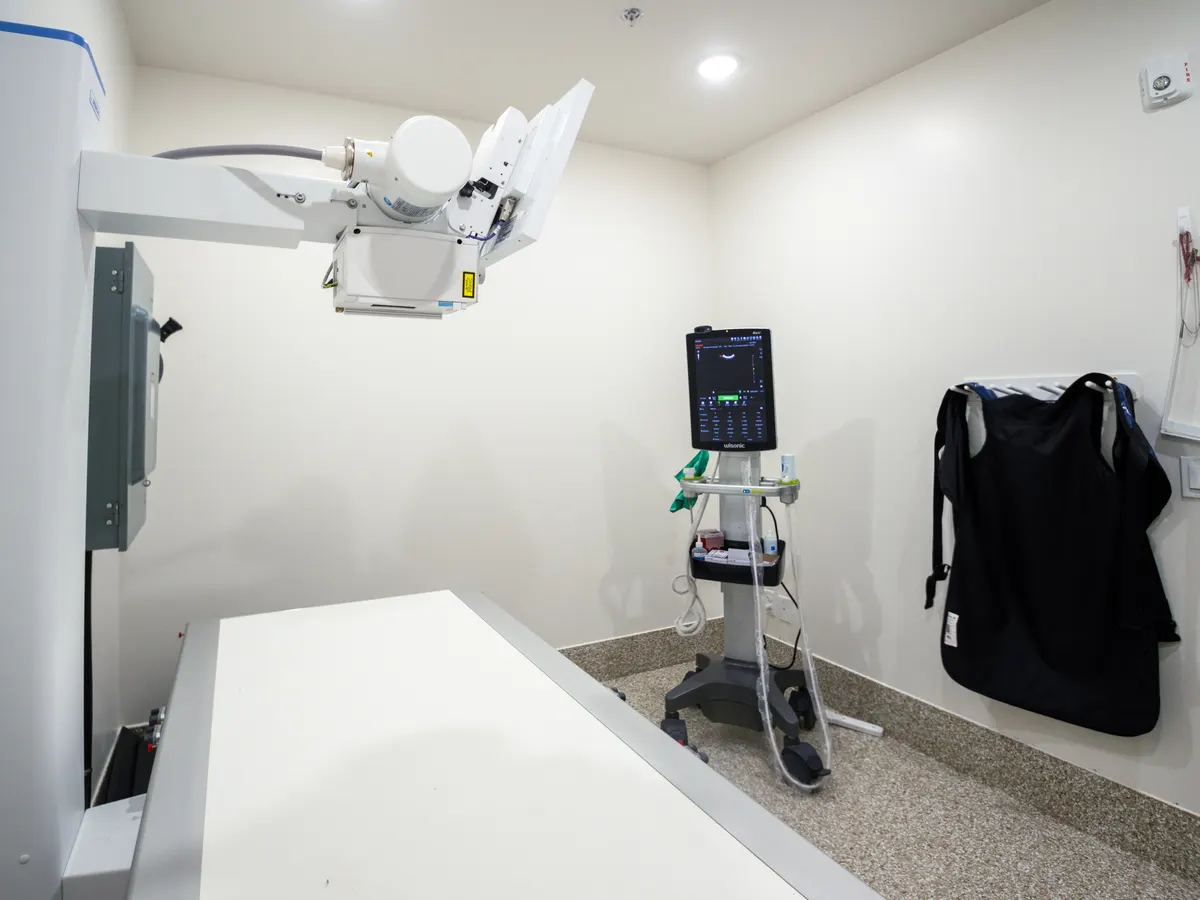
When something is wrong beneath the surface, a clear picture changes everything. Digital radiography (X-ray) lets our veterinarians look inside your dog or cat in minutes — bones, joints, the chest, and the abdomen — without surgery, and with far less guesswork. At Agave Animal Hospital in St. George, digital imaging is one of the first tools we reach for when a pet is limping, coughing, straining, or just “not themselves.”
What digital X-ray shows us
X-rays are especially good at revealing structure and density. For pets across Washington County, that often means answering questions like:
- Bones and joints — fractures, arthritis, hip and elbow changes, and luxating patellas — plus the sprains and injuries common in active desert dogs that hike the red rock.
- Chest — the heart and lungs, helpful when a pet is coughing or breathing hard.
- Abdomen — the bladder, intestines, and signs of obstruction or stones.
- Foreign objects — swallowed items, and many of the rocks or toys curious pets find on the trail.
A radiograph is often the fastest way to turn a vague worry into a concrete plan — and when the image rules a problem out, that answer can be just as valuable as a diagnosis.
Signs your pet may need an X-ray
You don’t have to diagnose your pet — that’s our job. But these are the situations where imaging is commonly the next step:
- A limp or stiffness that lasts more than a day or two, or obvious pain after a hard landing on a hike
- A lingering cough or tiring unusually fast on walks (a pet struggling to breathe is an emergency — seek immediate care)
- Repeated vomiting, gagging, or refusing food — especially if you suspect a swallowed toy, rock, or corn cob
- Straining to urinate, frequent small accidents, or blood in the urine, which can point to bladder stones — and a pet straining without passing any urine (especially a male cat) needs veterinary attention immediately
- Any significant trauma, such as being hit by a car or taking a bad fall, even if your pet seems to shake it off
- A new firm swelling over a bone or joint
When something like this comes up, our urgent care service is built around same-day appointments during regular hours — and imaging is often part of that visit.
Why digital, and why in-house
Digital radiography produces images in seconds rather than developing film, often using a lower dose of radiation. The images can be enlarged, adjusted, and set side by side, so your veterinarian can study fine detail on the spot: a hairline fracture, a subtle change in the outline of an organ, the exact position of a swallowed object.
Because we capture and read images right here, you usually get answers during the same visit instead of waiting days. For an anxious pet (and a worried owner), that speed matters.
Digital files also become a permanent part of your pet’s medical record, so we can compare images taken months or years apart and catch slow changes — an arthritic hip, a gradually enlarging heart — that a single snapshot might miss.
What to expect at your pet’s X-ray visit
Most X-rays take only a few minutes, and the images themselves are painless. Here’s how a typical imaging visit goes:
- Exam first. Your veterinarian examines your pet and explains what we’re looking for and which views we need.
- Gentle positioning. A trained team member settles your pet on a padded table for the clearest view — usually just a minute or two of holding still per image.
- Images in seconds. The digital sensor captures each view instantly, with no film to develop and fewer retakes.
- Review together. Your veterinarian pulls the images up on a monitor, walks you through what they show in plain English, and lays out the next steps.
For pets who are uncomfortable, anxious, or won’t hold still, your care team may recommend light sedation so we get a diagnostic image safely and with as little stress as possible.
What’s included
- In-house digital radiographs of bones, chest, or abdomen
- Same-visit review with your veterinarian
- Gentle positioning by trained team members, with light sedation available if your pet needs it
- A clear explanation of what the images mean and the next steps
How X-ray works with our other diagnostics
No single test tells the whole story, which is why our diagnostic tools are designed to work together:
- Ultrasound is the natural partner to X-ray: radiographs show structure and density, while ultrasound shows soft tissue in fine detail and in motion. A pet with an abdominal concern often benefits from both.
- In-house laboratory testing adds the chemistry — bloodwork and urinalysis reveal how organs are functioning, while images show how they look.
- Dental radiographs apply the same technology to the mouth, where much of dental disease hides out of sight below the gumline.
- Surgery planning often starts with an image — confirming a fracture or locating a swallowed object before deciding whether an operation is the right next step.
Imaging questions also come up during routine wellness exams, where a subtle finding on a senior pet’s physical is sometimes the first clue that a closer look is worthwhile.
Worried about a limp, a cough, or a pet who swallowed something they shouldn’t have? Request an appointment through our contact page and we’ll help you get answers. New to Agave? Our new patients page explains how to get established with our St. George team.
Frequently asked questions
Is a digital X-ray safe for my pet?
Yes. Digital radiography uses a low dose of radiation, and a typical imaging session involves only a few exposures, so the risk to your dog or cat is very small. The diagnostic information we gain almost always far outweighs that minimal exposure, and our team follows safe handling practices for every study.
Will my pet need to be sedated for X-rays?
Often no. Many pets hold still well enough for clear images while gently positioned by our team. If your pet is painful, anxious, or won't stay in position, we may recommend light sedation so we can capture a diagnostic image safely and comfortably. We'll always talk through the options with you first.
Can I get X-ray results the same day?
In most cases, yes — once we're open, we'll capture and read digital images in-house at our St. George hospital, so your veterinarian can discuss the findings with you during the same visit. You'll see the images on the monitor with us, and you'll leave knowing what they show and what happens next rather than waiting days for a phone call.
What's the difference between an X-ray and an ultrasound for pets?
They answer different questions. X-rays show structure and density — bones, joint changes, the size and shape of organs, and many swallowed objects. Ultrasound shows soft tissue in fine detail and in motion, like the internal texture of an organ. Your veterinarian will often start with an X-ray for a broad view, then add ultrasound if a specific area needs a closer look. Many pets benefit from both.
Can an X-ray show if my dog swallowed something?
Often, yes. Dense objects like rocks, metal, and some bones show up clearly on a radiograph, and even items that don't — fabric, plastic, corn cobs — can reveal themselves through telltale gas patterns in the intestines. If you saw or suspect your dog swallow something, don't wait to see if it passes; call a veterinarian promptly, because an intestinal obstruction can become serious quickly.
Does my pet need to fast before an X-ray?
Usually not for the X-ray itself. Withholding food helps in two situations: an empty stomach makes abdominal images easier to interpret, and if there's a chance your pet will need light sedation, fasting beforehand is safer. When you schedule, we'll tell you whether skipping breakfast makes sense for your pet's visit — and water is almost always fine.